ECON 121 Discussion: Week 2

Slides available here:

All discussion slides here:

Course Info

Lectures: MWF 9 - 9:50 AM (145 2BSB) w/ Dr. Pieper (TAs: me and Festus Baah)

My office hours (UH 817):

  • Mondays, 3 PM - 4 PM
  • Wednesdays, 1 PM - 2 PM
  • Fridays, 10 AM - 11 AM

Festus’s office hours:

  • Tuesdays, 9 AM - 10:30 AM (UH 819)
  • Thursdays, 9 AM - 10:30 AM (via Zoom)


Office hours can change: I’ll let you know in advance in discussion sections and on Blackboard if I change or cancel my office hours

I do not take appointments outside of the office hours above. Feel free to go to Festus’s office hours: we’re both TAs for this course.

Office hours are completely open: you do not need a reservation. Just come in.

About Me

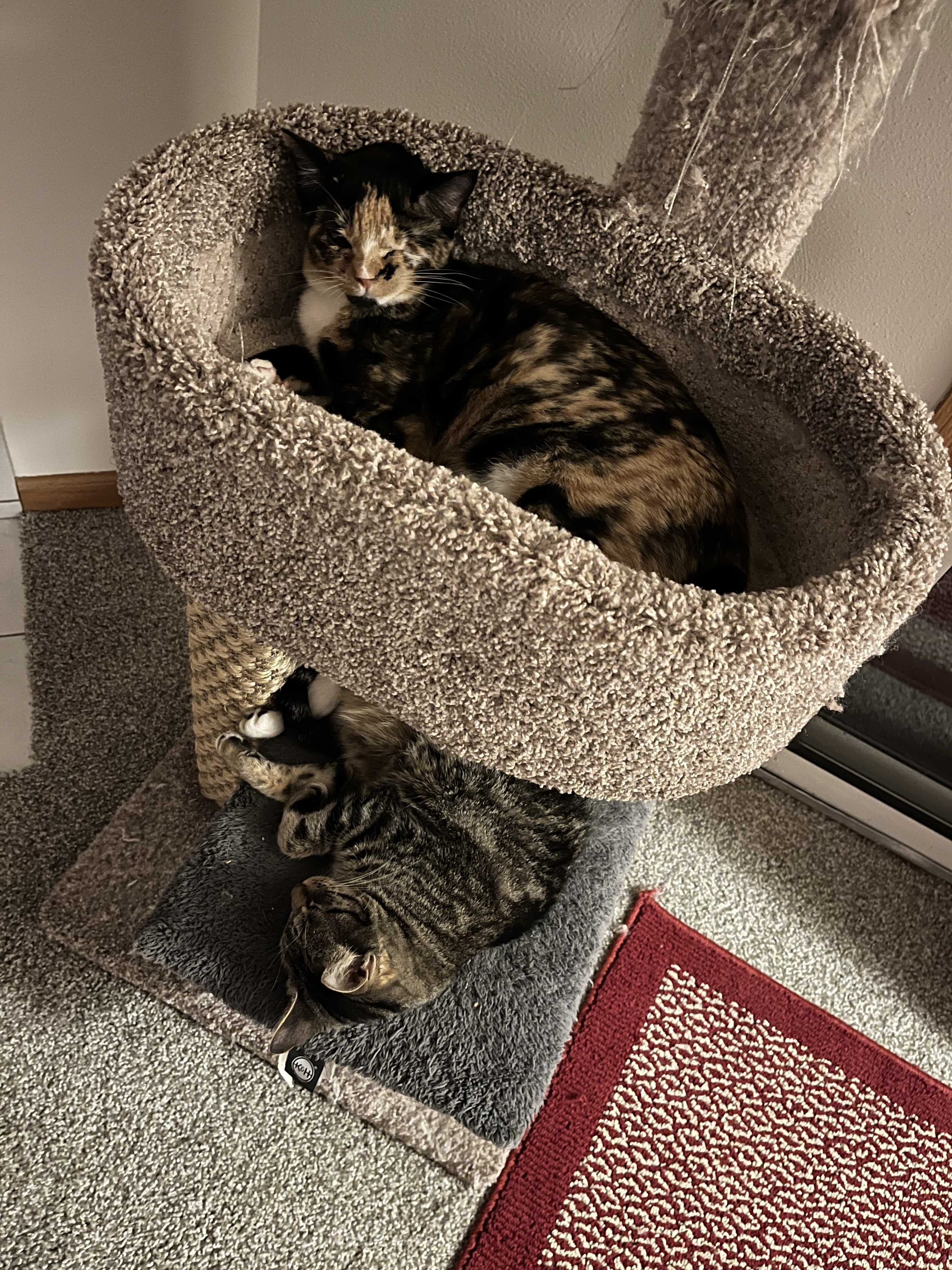
Mine and my wife’s cats: Penny (top) and Tina (bottom)

Call me “Isaac”; (he/him)

  • I’m an econ Ph.D. student

  • 🎓 Previously:

    • B.S. in Finance, University of Missouri (2015)
    • M.A. in Economics, San Diego State University (2021)
  • 👔 Previously: data analyst/scientist positions at CNN, Disney, and the University of Wisconsin-Madison


You can do very cool things with an economics degree! I’m happy to give advice if you’re interested in majoring in econ or might be interested in a graduate degree in econ in the future.

Discussion Section Website

Each week I will post discussion section slides to this website: feel free to use them while studying

  • I will not cover everything in discussion that Dr. Pieper covers in lecture! These slides are not comprehensive and discussion sections are not substitutes for lectures.

  • These slides will not be emailed out or posted to Blackboard

This is not a replacement for the course Blackboard site

  • The Blackboard page is the official source of course information. My site is just for sharing discussion slides with you

My discussion section slides are webpages but they can be printed or exported as PDFs

me typing discussion slides

What We’ll Be Doing In Discussion Sections

Each week we’ll:

  1. Take attendance

    • Discussion attendance will make up 10% of your final grade

    • If you show up after I take attendance just see me after class and I’ll mark you present

  2. Briefly review key concepts from lecture

    • These reviews are not substitutes for lectures
  3. Work on practice problems

    • We’ll also review the most-missed questions from quizzes and exams

Discussion sections are meant for you: feel free to ask me for help with anything in lecture that was confusing or about a practice problem you want to cover.


There are no stupid questions. If anything is confusing or if you have a question, please interrupt me!

  • Chances are someone else has the same question

  • I promise I’ll do my best to make you feel comfortable about asking questions

Your “Homework” For Week 2

  1. Turn on Blackboard notifications

    • Major course announcements (like class changes or cancellations) will happen on Blackboard: please ensure you get notifications for these
  2. Get the textbook

    • If you’ve not gotten it already, you can buy online access to the book and Achieve here or at the bookstore
      • If you buy the book elsewhere (like Amazon) it will be more expensive and will not work!
  3. Bookmark my discussion slides site

    • Discussion slides will not be emailed or posted to Blackboard: please use the site to get them yourself
    • The slides each week will have QR codes you can scan at the beginning of class for the slides and the website
  4. If you take in-person quizzes and exams at the Disability Resource Center, schedule exam appointments with them for the semester

    • Check the syllabus for quiz and exam dates
  5. Check out the UIC Econ Club

    • The club offers tutoring for ECON 121 (and other econ courses)

Graphs Review

Chapter 2 Appendix

Graphs in Economics

We’re usually interested in how two or more variables change or interact with one another. Examples:

  • How does the price of Coca Cola change when the price of Pepsi changes?
  • How did people change their use of healthcare services after the Affordable Care Act was passed?
  • How do interest rates change along with changes in the money supply?


Graphs are important tools for analyzing these sorts of questions. To use and interpret graphs we need to know how to…

  • … find the slopes of lines in graphs
  • … calculate the areas under lines
  • … identify maximum and minimum points
  • … translate graphs into economic language


Macroeconomists use time series graphs a lot: the \(x\) axis is time (days, months, years) and we’re interested in how something changes across a time period

Finding Slopes of Lines

Many graphs have a \(y\) (vertical) axis and an \(x\) (horizontal) axis. Each axis will represent one variable and the graph will depict the relationship between the two variables. Points on the line are expressed as \((x, y)\).

To calculate the slope of a line depicting this relationship, use the “rise over run” formula:

\[ \frac{\text{Change in }y}{\text{Change in } x} = \frac{\Delta y}{\Delta x} = \text{Slope} \]

If the slope is positive, this tells us that the \(y\) variable and the \(x\) variable have a positive relationship with one another

  • As \(y\) increases, so does \(x\)

If the slope is negative, the \(y\) variable and the \(x\) variable have a negative relationship

  • As \(y\) increases, \(x\) decreases


Note: this says nothing about whether \(y\) causes \(x\) (or the opposite)

Finding Slopes of Lines

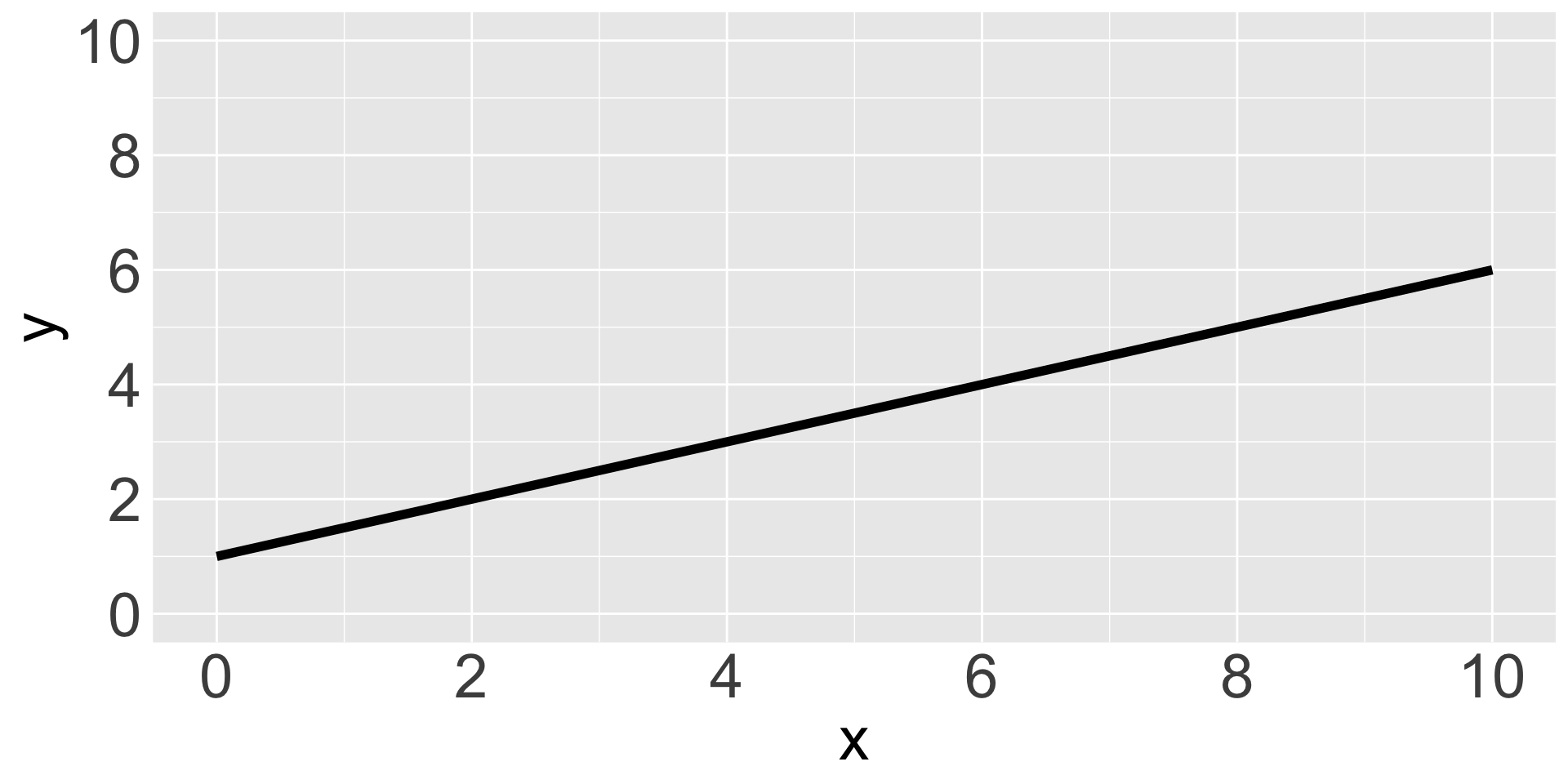
What are the slopes of the lines in the graphs below?
Finding Slopes of Lines

What are the slopes of the lines in the graphs below?
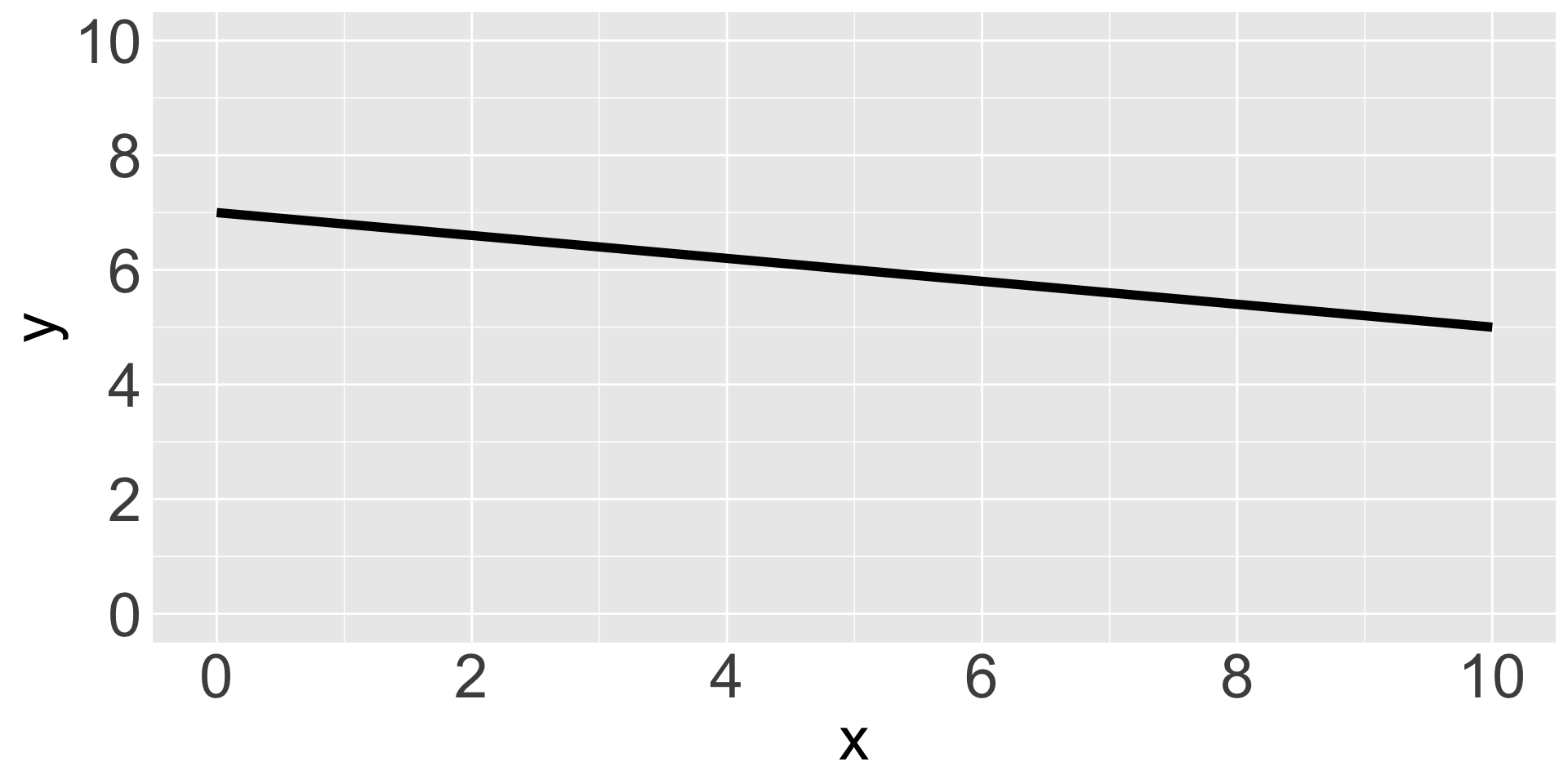
Answer

Pick any two points on the line and use the rise-over-run formula. Using the points \((0, 1)\) and \((10, 6)\): \(\frac{6-1}{10-0} = \frac{1}{2}\)

Answer

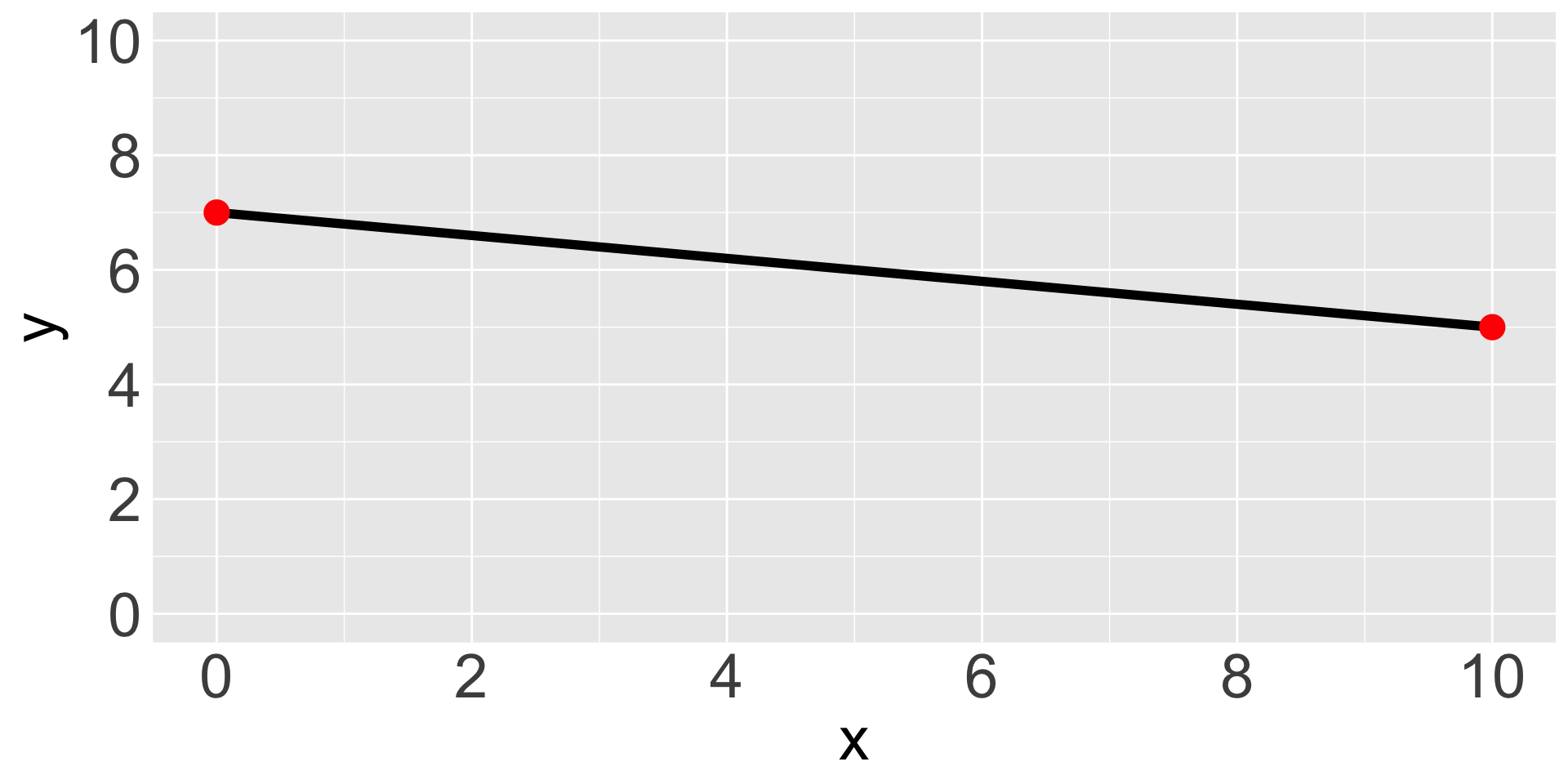
Pick any two points on the line and use the rise-over-run formula. Using the points \((0, 7)\) and \((10, 5)\): \(\frac{5-7}{10-0} = - \frac{1}{5}\)

Finding Slopes of Lines

What are the slopes of the lines in the graphs below?

Finding Slopes of Lines

What are the slopes of the lines in the graphs below?
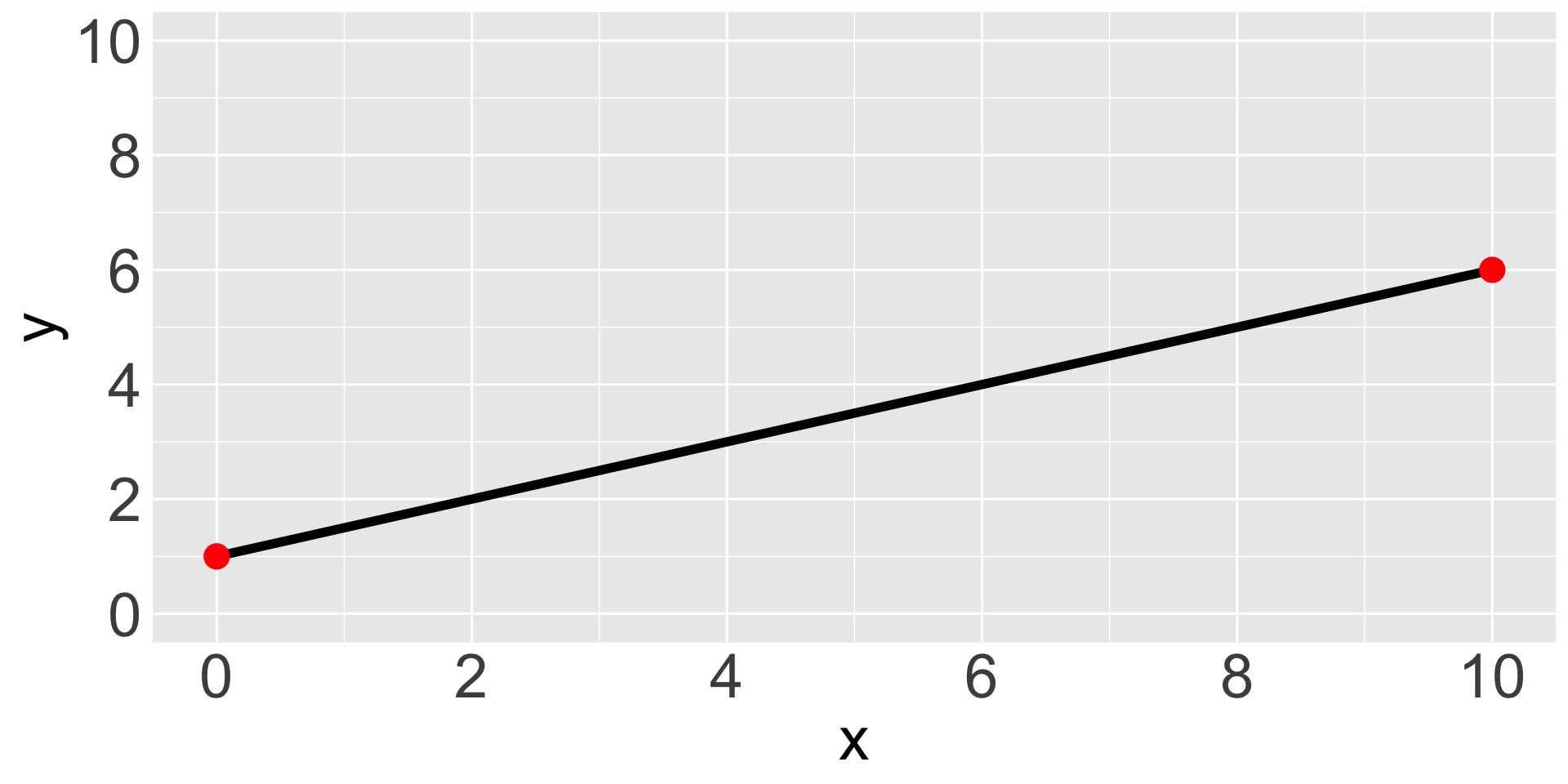
Answer

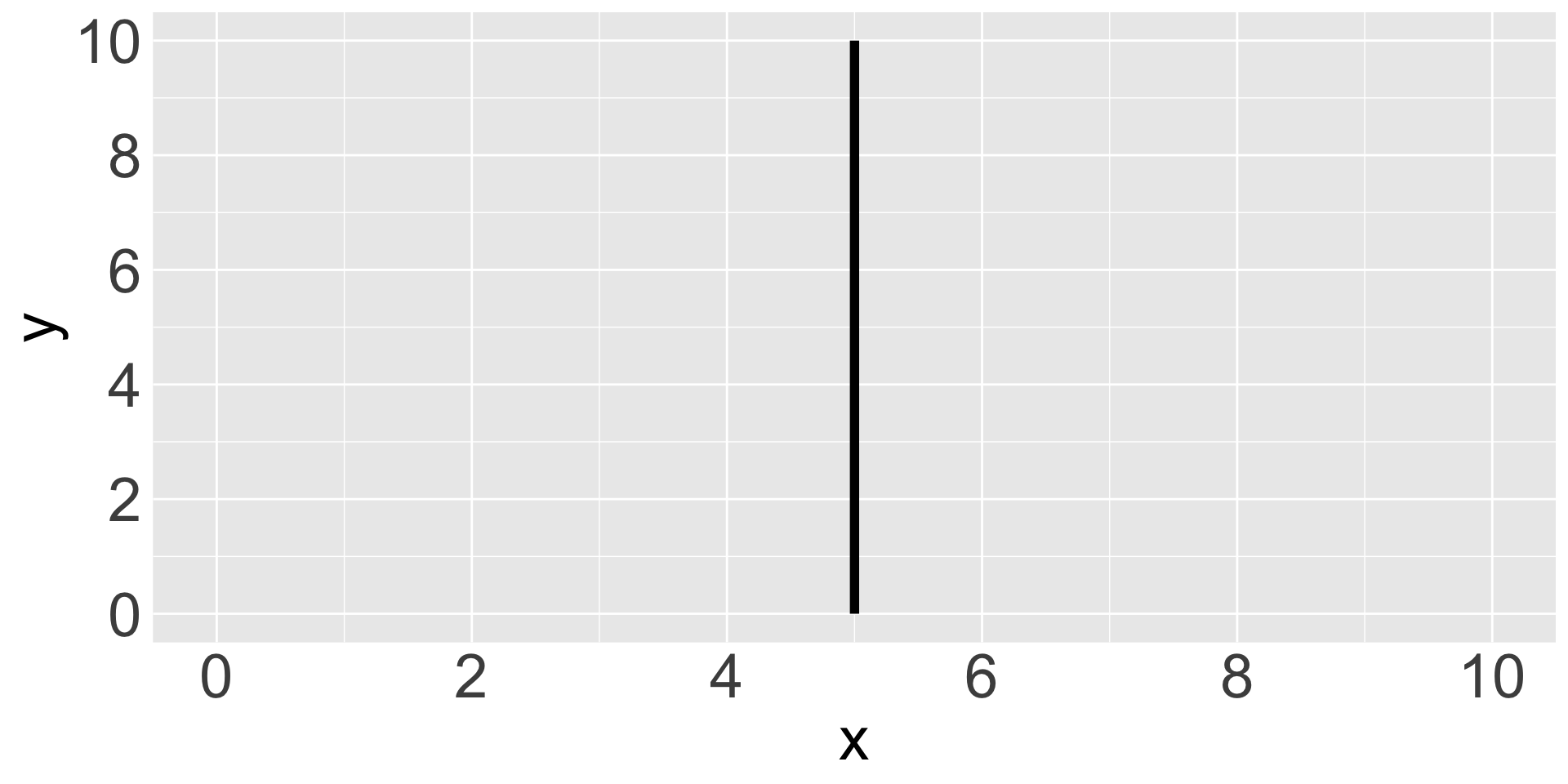
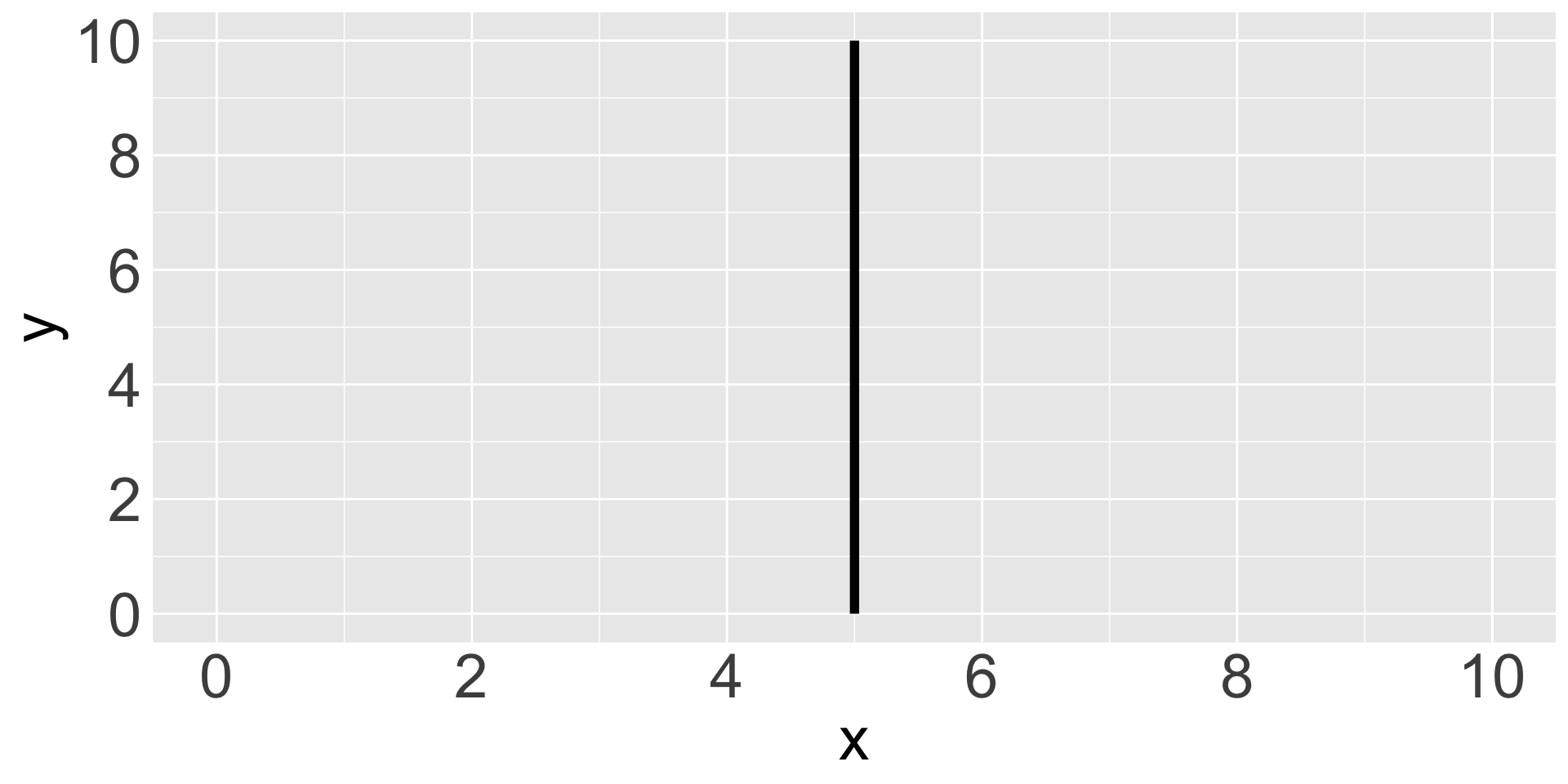
There’s no “run!” If we use the rise-over-run formula we divide by \(0\), so the slope is undefined.
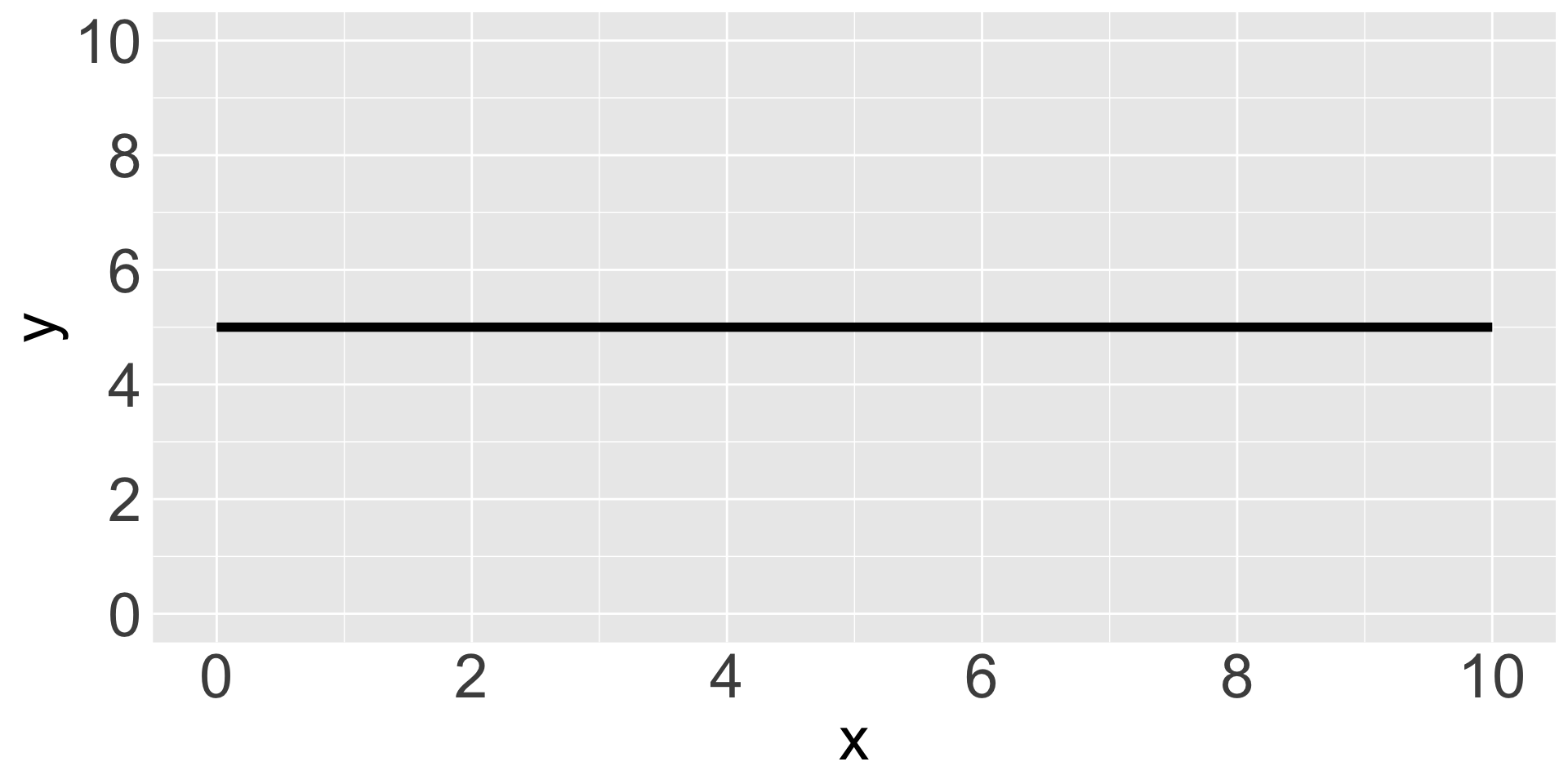
Answer

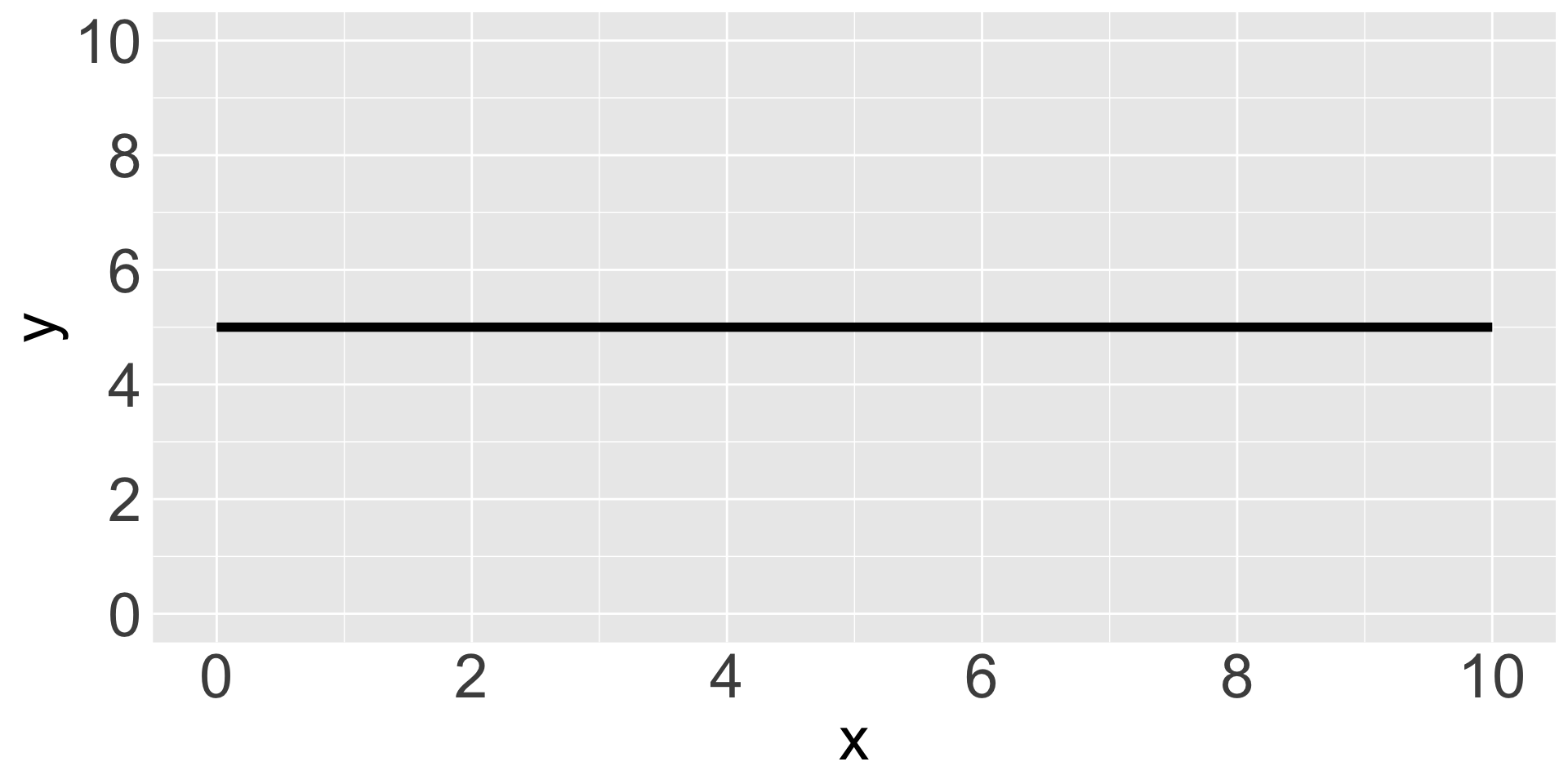
There’s no “rise!” Using the rise-over-run formula, \(0\) is in the numerator of the fraction. So the slope is \(0\).

Calculating Areas Under and Between Lines
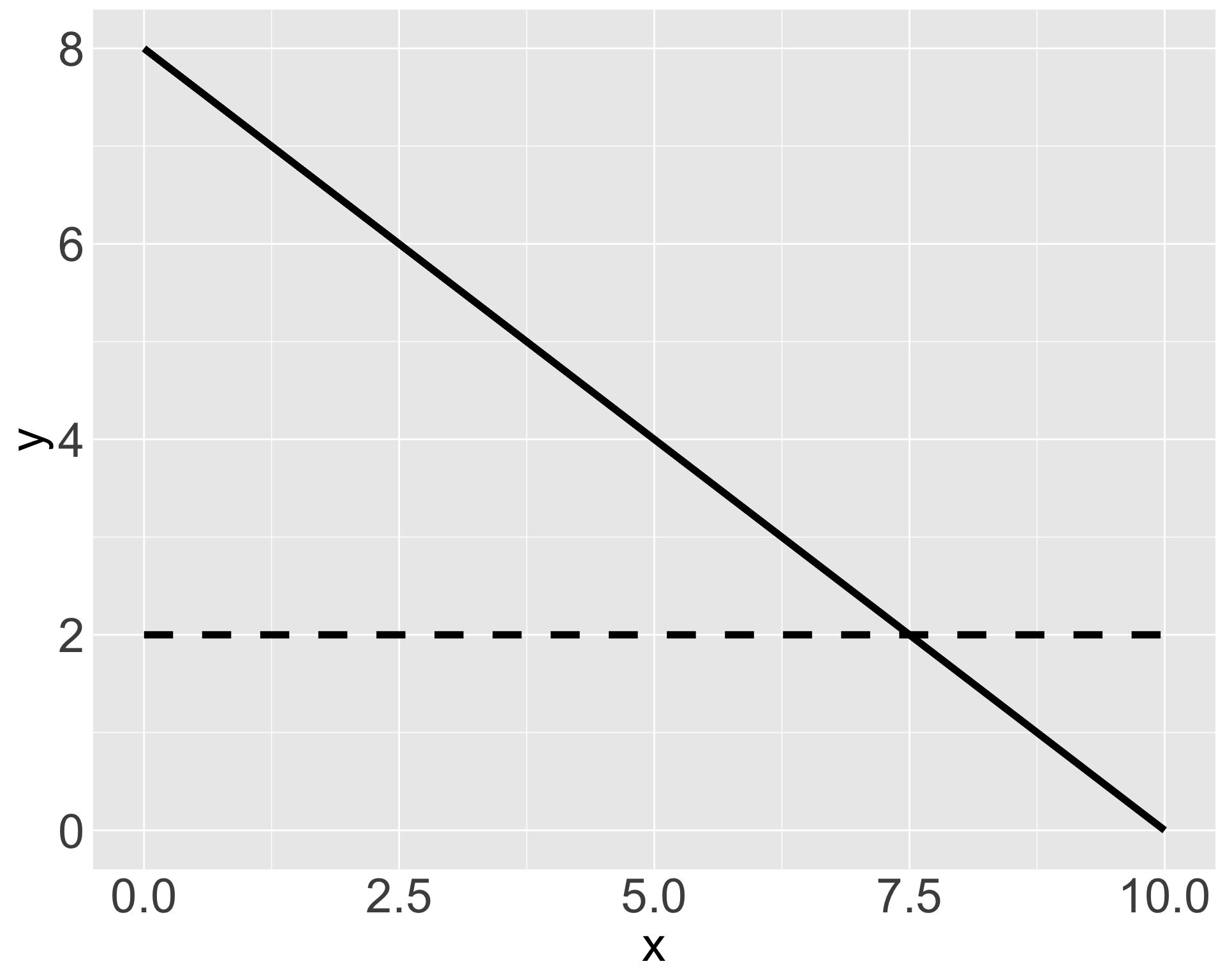
In this class the areas you’ll calculate will mostly be the areas of triangles.


Remember (or memorize) the formula for the area of a triangle:

\[ \text{Area} = \frac{1}{2} \times \text{Base} \times \text{Height} \]


In economics we’re interested in the areas under curves because they can tell us things like:

  • how much revenue is raised by a government imposing a tax

  • how much better or worse off consumers might be after some change in a market

Calculating Areas Under and Between Lines

In the graph to the left, what is the area of the space underneath the solid black line but above the dotted black line and to the right of the \(y\) axis?

Calculating Areas Under and Between Lines
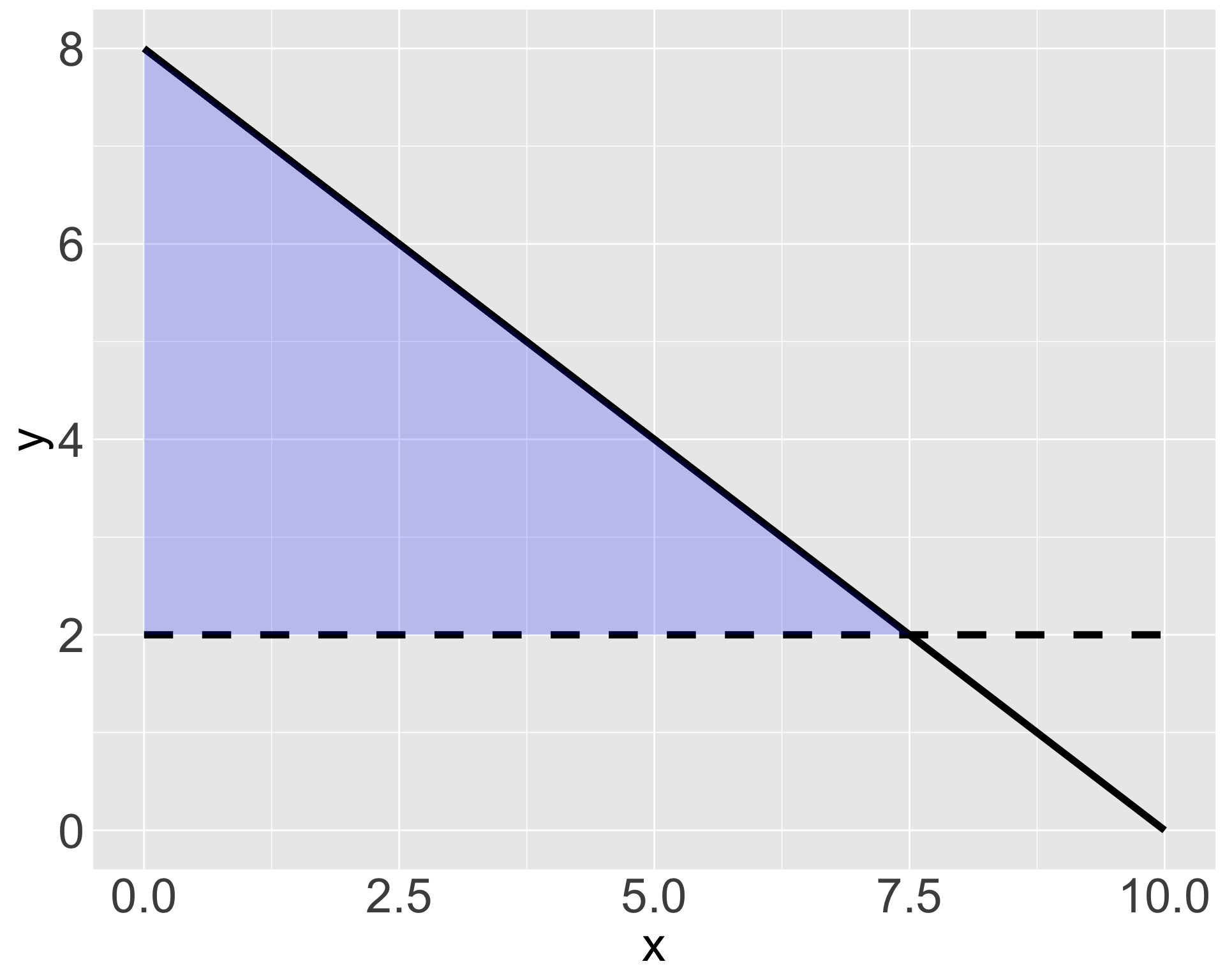
In the graph to the left, what is the area of the space underneath the solid black line but above the dotted black line and to the right of the \(y\) axis?

Answer

The space between the two lines and the \(y\) axis forms a triangle with height \(8 - 2 = 6\) and base \(7.5 - 0 = 7.5\). The area of the triangle is

\[ \frac{1}{2} \times 6 \times 7.5 = 22.5 \]

Maximum and Minimum Points

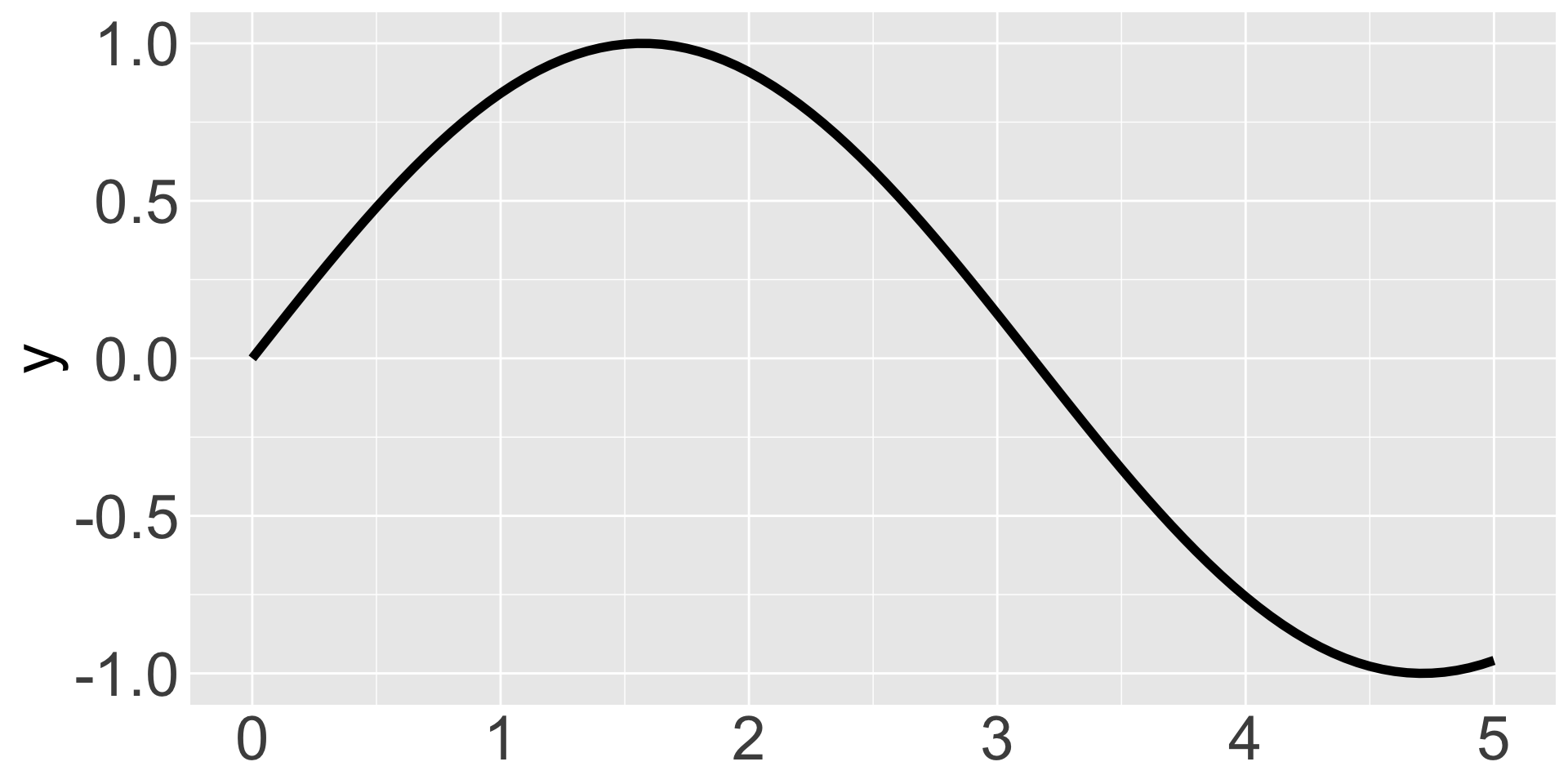
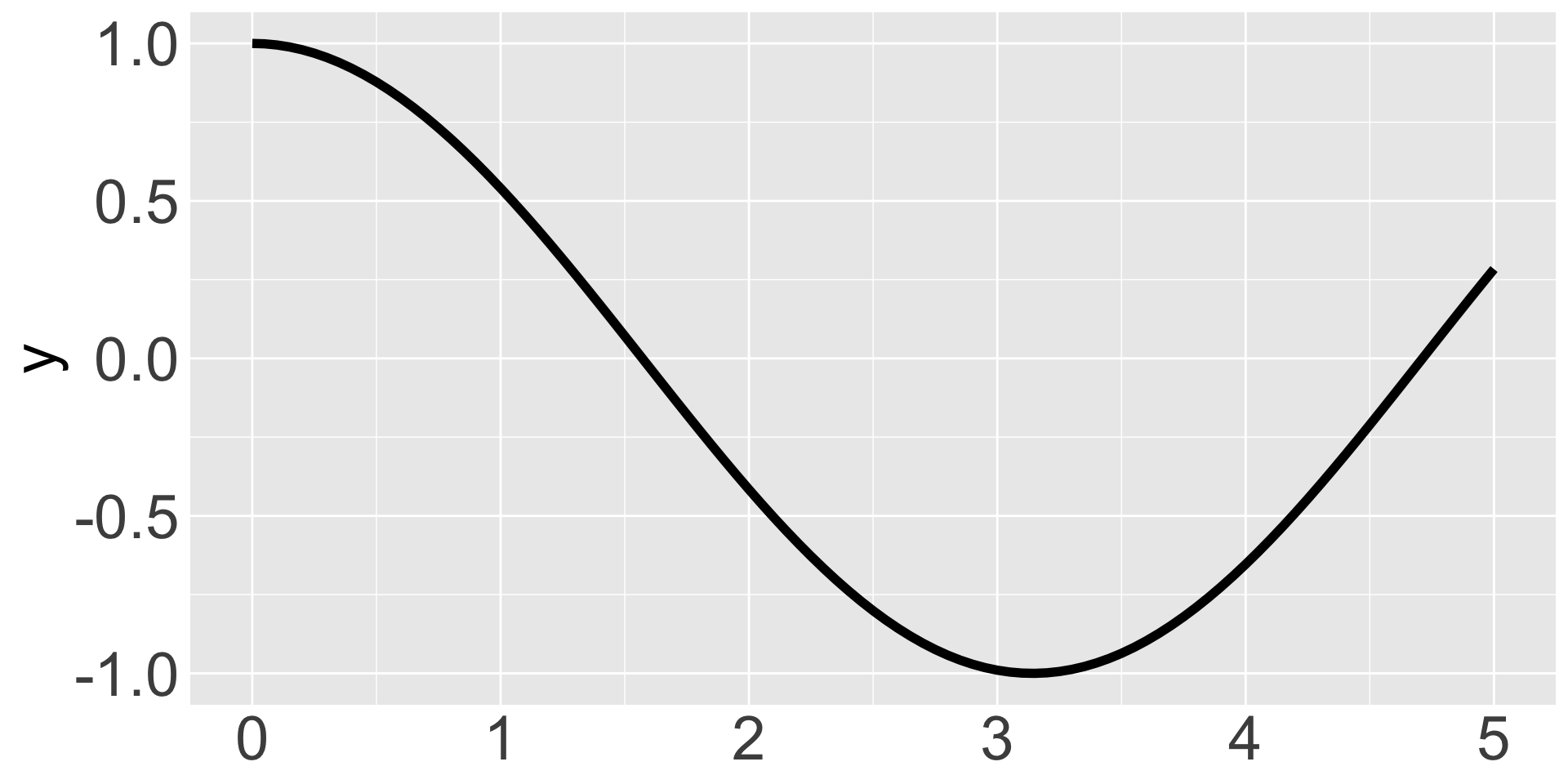
What’s the maximum value of \(y\) for the left graph? The minimum value of \(y\) for the right graph?

What are the slopes of the lines at these points?
Maximum and Minimum Points

What’s the maximum value of \(y\) for the left graph? The minimum value of \(y\) for the right graph?

What are the slopes of the lines at these points?
Answer

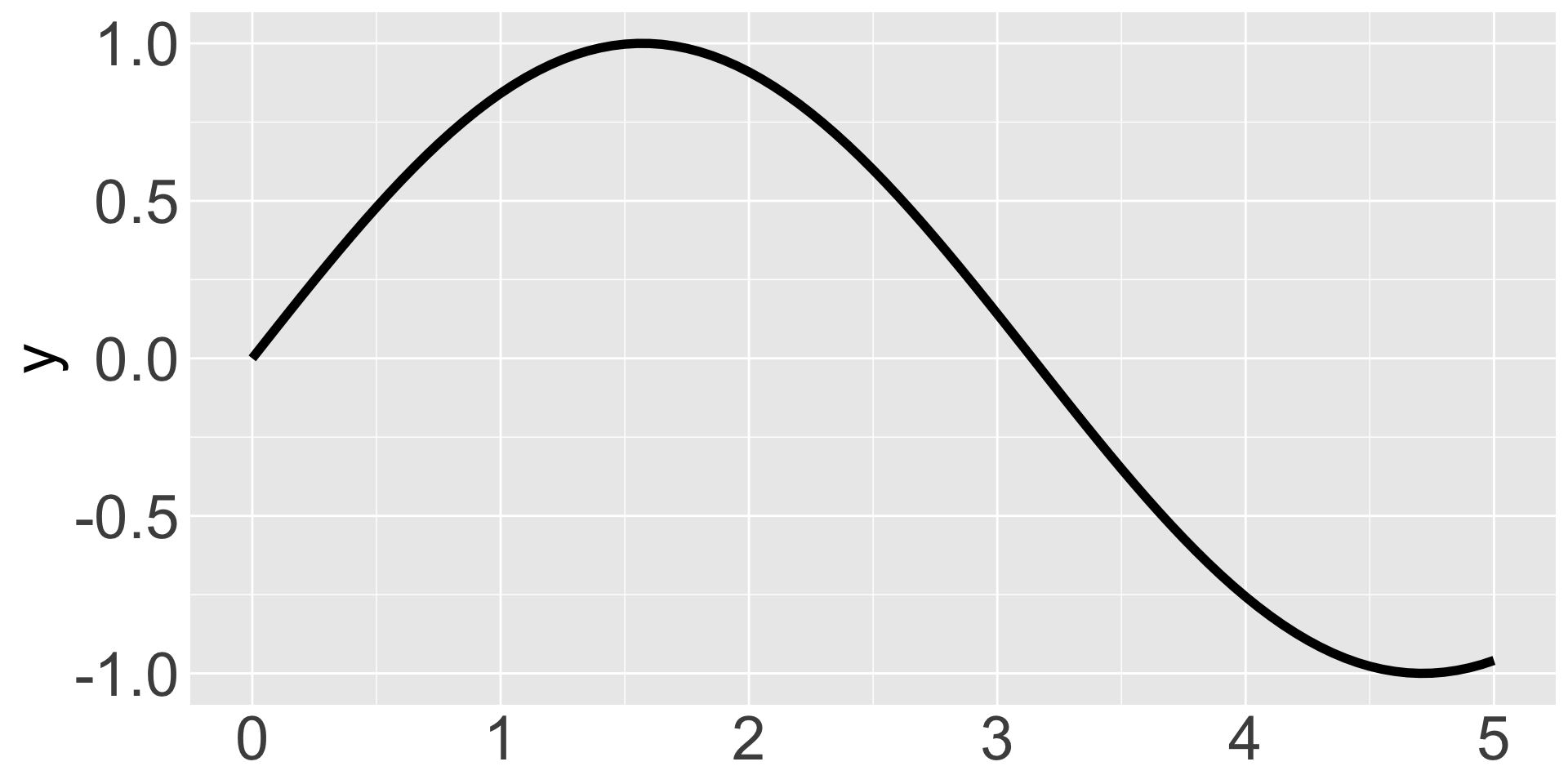
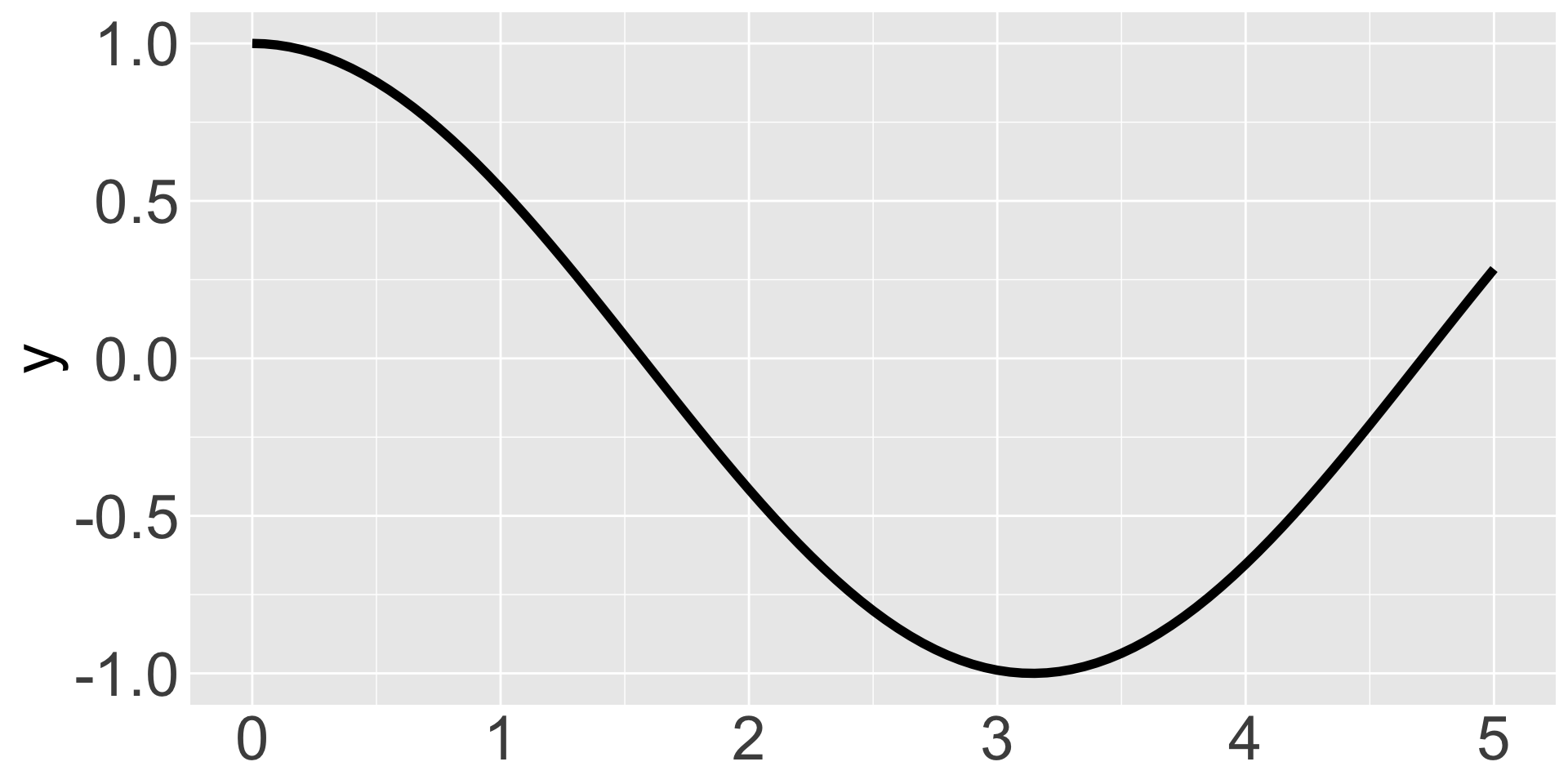
The left graph’s maximum is at \(y=1\). The right graph’s minimum is at \(y=-1\). The slope of a line at its minimum or maximum is always zero: the slope is transitioning between positive and negative at that point.

Supply and Demand

Chapter 3

Supply and Demand

The supply and demand model is the most fundamental model we use for explaining and analyzing economic behavior.

Buyers and sellers of a good act together through the laws of supply and demand to determine the price and quantity bought and sold of that good in a competitive market

  • Law of demand: if price \(\uparrow\), quantity demanded \(\downarrow\)

    • The demand curve represents the combinations of prices and quantities consumers demand; this curve slopes downward

    • As more of the good is available, it’s less scarce and people will want to pay a lower price

  • Law of supply: if price \(\uparrow\), quantity supplied also \(\uparrow\)

    • The supply curve represents the combinations of prices and quantities sellers supply; this curve slopes upward

    • As more of the good is produced, producers would love to sell it for a higher price

The equilibrium price and equilibrium quantity demanded and equilibrium quantity supplied occur where the two curves intersect

Supply and Demand

Some important points

  1. “Demand” and “supply” are not the same as “quantity demanded” and “quantity supplied”
  • “Demand” and “supply” = the curves in a supply/demand chart

    • These entire curves can move (e.g., if more factories open that make the good)
  • “Quantity demanded” and “quantity supplied” = points along those curves


  1. Equilibrium prices are determined by the supply and demand curves, not the other way around!
  • In a competitive market (with lots of buyers and lots of sellers), individual buyers and sellers can’t simply decide what price to pay/sell at: the market determines the equilibrium price

Supply and Demand

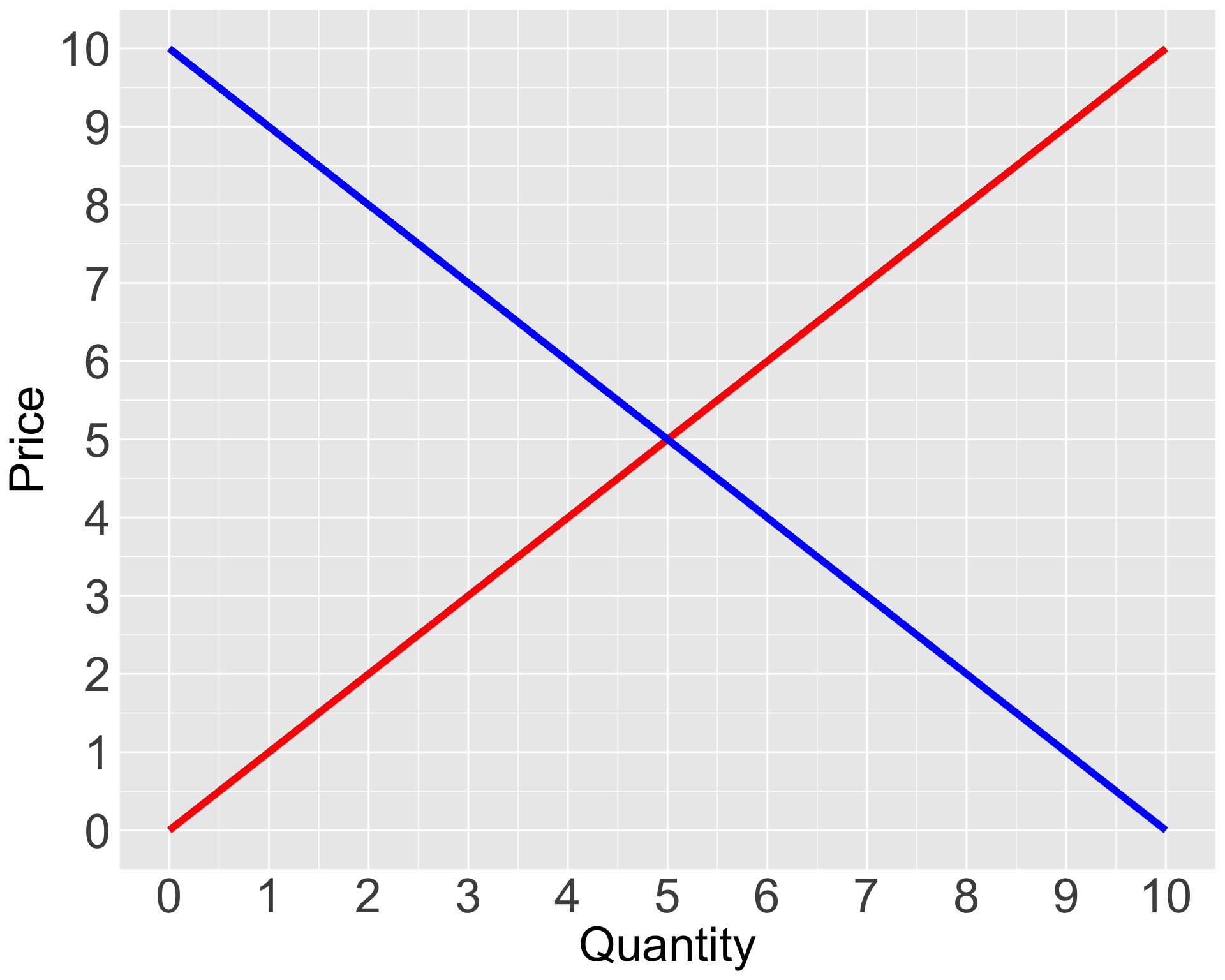
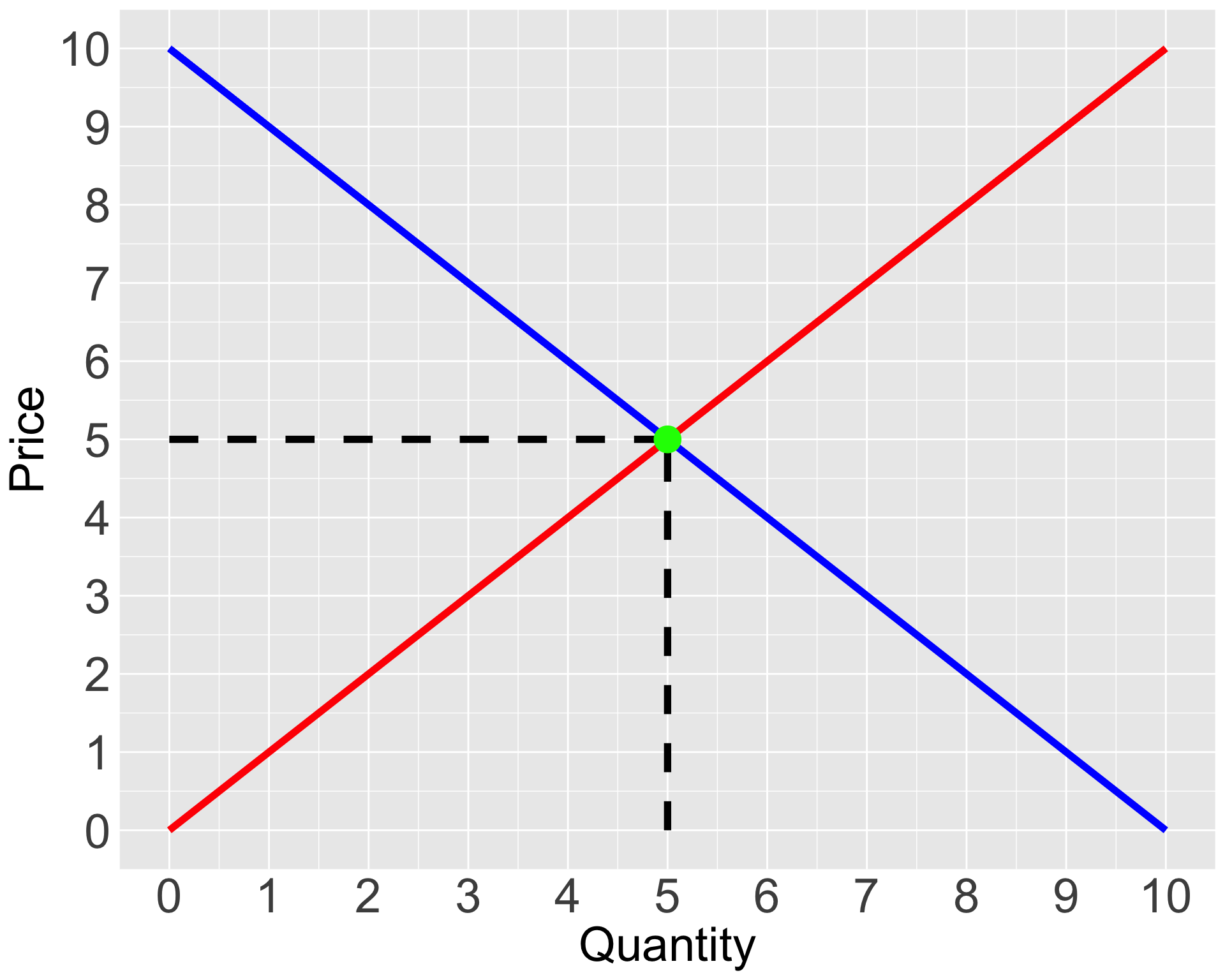
In the supply and demand graph below, which line represents the demand curve? The supply curve? What are the equilibrium price and quantity in this market?
Supply and Demand

In the supply and demand graph below, which line represents the demand curve? The supply curve? What are the equilibrium price and quantity in this market?
Answer

The demand curve is the downward-sloping blue line

The supply curve is the upward-sloping red line

The equilibrium point is where the curves intersect. The equilibrium price is $5 and the equilibrium quantity is 5 units.

Supply and Demand

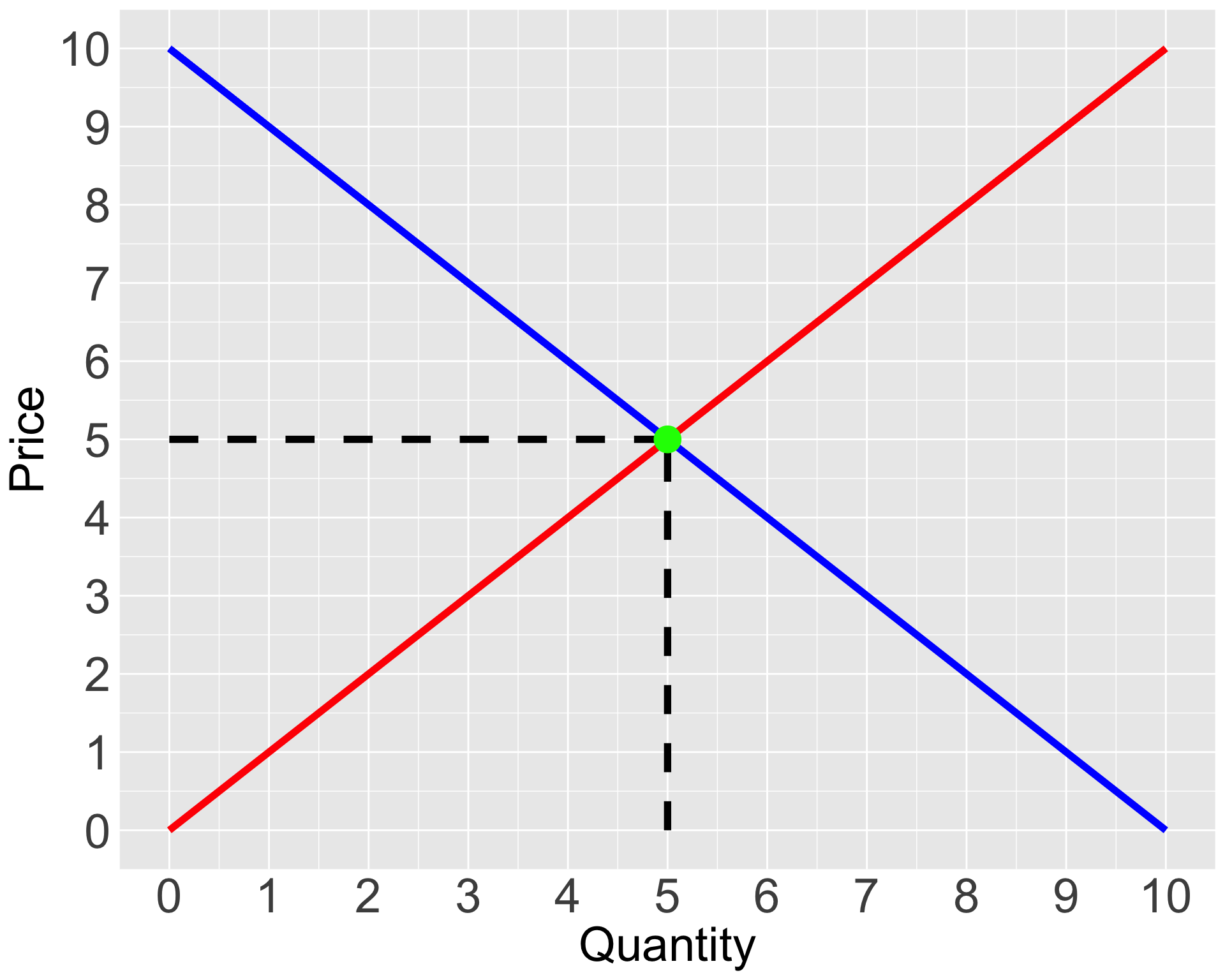
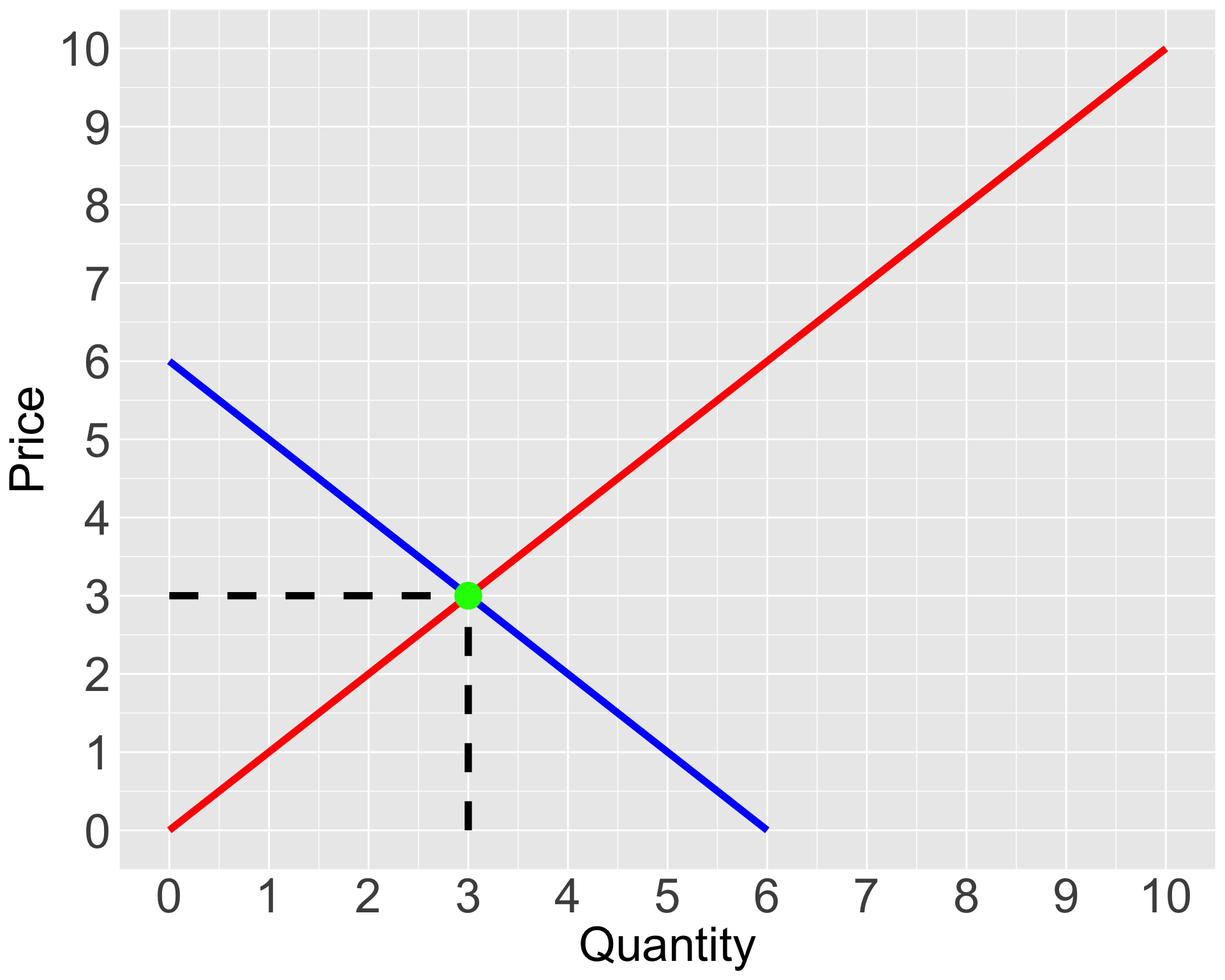
A news report comes out about how the good in this market is harmful to people’s health. Would this affect the demand for the good? The supply? What would happen to the equilibrium price and quantity?
Supply and Demand

A news report comes out about how the good in this market is harmful to people’s health. Would this affect the demand for the good? The supply? What would happen to the equilibrium price and quantity?
Answer

Demand for the good would fall: fewer people will want the good since it’s unhealthy! Supply wouldn’t be affected: the report doesn’t affect suppliers’ ability to produce the good.

The demand curve shifts down and we have a new equilibrium price ($3) and quantity (3).1